
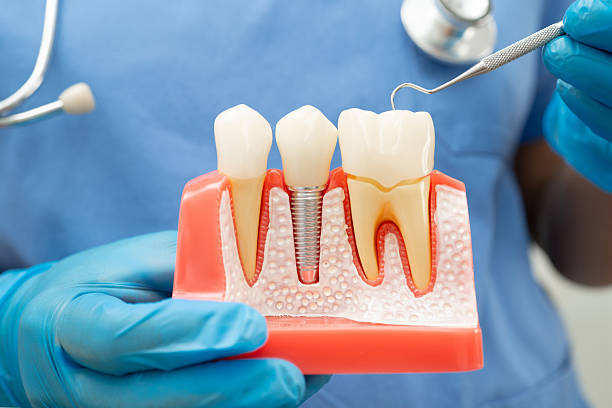
How Successful Are Dental Implants? What Influences Long-Term Results For Patients In St. Johns County
Dental implants are widely considered a predictable way to replace a missing tooth, but long-term outcomes depend on more than the implant itself. What determines how an implant performs over ten, fifteen, or twenty years comes down to your health, gum health, how much bone is available, how carefully the case was planned, where the implant sits, how well you heal, how your bite forces are managed, your daily oral hygiene, and how well you keep up with professional maintenance. For a closer look at typical timelines, see how long dental implants last.
Published success rates get quoted constantly, and on their own they’re almost always true and almost always misleading. A 96% figure from one study and a 95% figure from another can reflect different populations, follow-up periods, implant systems, and definitions of “success.”
This article focuses on why outcomes differ between patients weighing dental implants in St Johns FL or dental implants in St Johns, whether they’re in Fruit Cove, Bartram Park, or St. Augustine. At Bartram Dental Center, implant dentistry in St Johns FL starts with understanding these variables before any treatment plan is built. If you’re not yet sure you qualify, our guide on who’s a candidate for dental implants is a good starting point.
What Does “Dental Implant Success Rate” Actually Mean?
Before quoting any statistic, it helps to know what’s being measured. Dentistry and research use two related but distinct terms, and mixing them up is where most of the confusion starts.
Implant Survival Vs. Implant Success: What Is The Difference?
Survival is the simplest bar to clear: the implant is still in the mouth and functioning. That’s it. A surviving implant hasn’t been removed and isn’t mobile.
Success is a higher standard. Depending on the study, a “successful” implant might also need to show stable bone levels, no signs of uncontrolled infection or inflammation, healthy surrounding tissue, a functioning restoration, and the absence of complications that would bother the patient or threaten the implant’s long-term future. An implant can survive for years while still falling short of success criteria, sitting in bone with mild inflammation or a restoration that never quite fits right.
Different research groups define success differently, which is exactly why one paper’s numbers rarely map cleanly onto another’s.
Why Do Implant Success Statistics Vary Between Studies?
A handful of variables explain most of the spread you’ll see when you search around:
- How long patients were followed (a study that tracked people for three years will report different numbers than one that tracked them for fifteen)
- Who was in the study (younger, healthier patients versus older patients or those with periodontal disease, diabetes, or a smoking history)
- Where the implants were placed (upper jaw versus lower jaw, front versus back)
- What type of restoration was involved (single crown, bridge, full-arch)
- Whether patients kept up with maintenance visits
- Which definition of “success” the researchers used
- How the study was designed (prospective studies that track patients forward in time are generally considered more reliable than retrospective chart reviews)
None of this means the research is unreliable. It means a single percentage, lifted out of context, doesn’t tell you much about your own case.
What Does Research Say About Long-Term Dental Implant Outcomes?
The research base on dental implants is large, and the long-term picture is genuinely reassuring.
A 2019 systematic review and meta-analysis published in the Journal of Dentistry pooled 18 prospective studies of adults using modern implant systems and found a 10-year implant survival rate of 96.4%, with a more conservative sensitivity analysis (which accounts for patients lost to follow-up) landing at 93.2%. That same analysis found survival dropped meaningfully in patients 65 and older, roughly doubling the risk of implant loss compared with younger patients.
A 2024 meta-analysis focused specifically on 20-year outcomes pooled eight studies on screw-shaped, rough-surface titanium implants: three prospective studies (237 implants) showed 92% survival among patients tracked the full 20 years, though that number fell to 78% once researchers accounted for patients who dropped out along the way, since some of those dropouts likely represent unreported failures. Five retrospective studies (1,440 implants) showed 88% survival.
Those numbers describe survival, not success in the fuller clinical sense, and each one is an average across a large, mixed population rather than a guarantee for any one patient. Still, they’re a fair summary of where modern implant dentistry stands: high-percentage predictability over long time horizons, with the gap between survival and full success mostly explained by the risk factors covered later in this article.
Why Does Follow-Up Time Matter When Evaluating Implant Success?
An implant that’s doing well at one year tells you less than you’d think about year fifteen. Five-year data looks encouraging almost by default, because most implant complications haven’t had time to develop yet. They tend to accumulate slowly, through gradual bone loss, mechanical wear on the restoration, or peri-implant inflammation that builds over years of inconsistent maintenance, which is exactly why 10-year and longer follow-up carries more weight than a short study ever could.
That’s why the strongest evidence in this field comes from studies with 10-year or longer follow-up. It’s also why your own maintenance schedule matters more with each passing year, not less.
Why Should Patients Avoid Comparing One Success Percentage To Another Without Context?
If one office advertises a 98% success rate and another quotes 92%, that difference might reflect nothing more than how each one defines success, how long they followed patients, which cases they included, or which implant system was used. It’s not a reliable way to compare providers. A more useful question to ask any dentist is how they define success, what their own follow-up looks like, and how they handle cases that don’t go as planned.
How Does Treatment Planning Influence Dental Implant Success?
The outcome of implant treatment is decided well before the day of surgery. Dental implant planning looks at your available bone, the position of nerves and sinuses, your final tooth position, your bite, the design of the eventual restoration, and your medical history, and maps the surgery around all of it together rather than placing an implant first and figuring out the crown later. This is the core of implant treatment planning at any implant dentistry practice in St Johns worth choosing.
Why Bone Quality And Volume Matter
An implant needs enough bone, in the right height, width, and density, to achieve stability from day one and hold that stability over time. Where bone is thin or short, additional evaluation and sometimes grafting become part of the plan. We’ve covered what causes bone loss and how grafting works in separate articles if you want the fuller picture. The point here is simpler: bone assessment sets the foundation the rest of the plan sits on.
Why Cbct Imaging Can Improve Implant Planning
Cone-beam CT imaging gives a three-dimensional view of your jaw, showing bone dimensions, nerve pathways, and sinus position with a level of detail a flat X-ray can’t match. That view lets your dentist plan the implant’s exact position before ever picking up a drill. We go into more depth on this and other planning technology in our article on dental implant technology in St. Johns, FL.
Why The Final Restoration Should Be Considered Before Implant Placement
The best implant planning works backward from the finished tooth. This is sometimes called prosthetically driven implant planning: deciding where the crown, bridge, denture, or full-arch restoration needs to sit for good function and appearance, then placing the implant in the position that supports it. An implant placed without that end goal in mind can end up structurally sound but restoratively awkward, which brings us to the next section.
Why Is Dental Implant Position So Important For Long-Term Results?
Position is one of the most consequential and least discussed factors in long-term implant outcomes. Depth matters, but so does angulation, how far the implant sits from the cheek or tongue side, its spacing from neighboring teeth, implants, and other nearby anatomy, how much healthy bone surrounds it, and how accessible it is for the restorative dentist to work with. All of that factors into how the case performs for years afterward.
Implant Position Influences How Chewing Forces Are Distributed
Every implant absorbs forces every time you bite and chew, and the direction those forces travel, straight down versus at an angle, changes how much stress lands on the restoration versus the surrounding bone. Good position helps distribute that load the way a natural tooth root would; poor position can concentrate force unevenly on the restoration or the bone around it. That doesn’t mean an off-angle implant is doomed. It means bite adjustment and restoration design carry more weight, and the margin for error gets narrower.
Implant Position Influences The Final Crown Or Restoration
Where the implant sits shapes how the crown emerges from the gum, how natural its contours look, how well it blends with the teeth around it, and how comfortably it functions when you bite and speak. A slightly misplaced implant can still support a restoration, just one that’s harder to clean, less natural in appearance, or less comfortable to use day to day.
Poor Position Can Make Cleaning And Maintenance More Difficult
This is the connection patients least expect: implant position affects hygiene access years down the road. A restoration with tight, hard-to-reach contours makes plaque control harder, and plaque control is directly tied to peri-implant tissue health, a link we go into further in our article on gum health and dental implant success.
How Does Oral Hygiene Affect Dental Implant Success?
Implants don’t get cavities, but the tissue around them can absolutely get sick, and that risk tracks closely with how well plaque is controlled at home and in the dental chair. Good implant hygiene comes down to consistency: daily home care paired with routine professional cleaning is what protects long-term implant health.
Why Plaque Control Matters Around Implants
Left undisturbed, plaque along the gumline triggers inflammation. Around a natural tooth, that’s gingivitis. Around an implant, the equivalent early-stage inflammation is called peri-implant mucositis, and it’s generally reversible with better home care and professional cleaning. Left unaddressed, it can progress to peri-implantitis, a more serious condition involving bone loss around the implant. Estimates vary by study and diagnostic criteria, but peri-implantitis shows up in a meaningful share of implant patients over time. The single biggest modifiable factor across that research is consistent dental implant maintenance.
Why Professional Maintenance Matters Even If The Implant Feels Fine
Peri-implant disease is frequently painless in its early stages, which is exactly why it needs to be caught by a professional rather than a patient. Routine visits let your dentist assess tissue health, check bone levels when indicated, confirm the restoration is still fitting and functioning correctly, and evaluate your bite. Skipping these visits because “it feels fine” is how early, reversible inflammation turns into something harder to treat. If you want to know what to watch for between visits, our article on dental implant failure signs covers it.
How Does Your General Health Affect Dental Implant Outcomes?
General health doesn’t automatically rule anyone out of implant treatment. Diabetes, smoking, certain immune or autoimmune conditions, and specific medications can all shift the risk profile, and a good implant dentist plans around that risk rather than ignoring it.
How Can Diabetes Affect Implant Healing And Maintenance?
The research on diabetes and implant failure is genuinely mixed. Some earlier, smaller meta-analyses didn’t find a statistically significant increase in failure risk tied to diabetes alone. But a larger 2022 meta-analysis pooling 89 studies and roughly 68,000 implants found diabetic patients had a meaningfully higher failure risk than non-diabetic patients, with the difference more pronounced in type 1 diabetes than type 2.
That said, blood sugar control still matters clinically, because healing and inflammatory response can be affected when glucose levels run high. The practical takeaway is that glycemic control, not a diabetes diagnosis on its own, is what belongs in the conversation with your dentist and physician before and after treatment.
How Does Smoking Affect Dental Implant Outcomes?
Smoking is one of the more consistently documented risk factors in the implant literature. Multiple meta-analyses, including one pooling data on more than 35,000 implants placed in smokers, have found roughly double the failure risk compared with non-smokers, along with measurably greater marginal bone loss, a combination that adds up to weaker long-term peri-implant health. Nicotine restricts blood flow, which slows healing and dampens the body’s response to inflammation, both of which matter enormously around a healing implant site.
That’s a documented biological effect, not a judgment call, and it’s one reason smoking cessation support is worth raising with your dentist if you’re considering implants.
Why Should Your Dentist Review Medications And Medical History?
Certain medications and medical conditions affect bone metabolism, healing capacity, or bleeding risk in ways that matter for both the surgery and the years afterward. That review carries real weight in the plan, feeding directly into decisions about bone grafting and implant position, which is why a thorough medical history belongs at the start of treatment planning, not partway through.
How Does Healing Affect Long-Term Dental Implant Success?
Healing sets the biological foundation everything else depends on, and that process extends well past the first few months after surgery.
What Is Osseointegration?
Osseointegration is the biological process by which living bone forms a direct structural connection with the implant surface. It’s what makes a titanium or zirconia implant function like a tooth root: without it, the implant has no stable foundation to support chewing forces. We cover the week-by-week healing timeline in a separate article; here, the point is that the quality of that initial bone-to-implant connection influences how the implant performs for the rest of its life.
What Can Interfere With Implant Healing?
A number of factors can slow or compromise the integration process, including infection at the surgical site, inadequate initial stability of the implant, smoking, certain systemic health conditions, excessive force placed on the implant too early, and not following post-operative instructions closely. None of these guarantees a problem on its own, and most healing proceeds without incident, but each one shifts the odds.
How Do Bite Forces Affect Dental Implant Longevity And Success?
Once an implant has integrated and been restored, it enters daily service, absorbing the same occlusal forces your natural teeth do, just without quite the same shock absorption.
Why Dental Implants Respond Differently To Bite Forces Than Natural Teeth
Natural teeth are cushioned by a periodontal ligament, a thin band of tissue that lets the tooth flex slightly and helps sense and distribute biting force. Osseointegrated implants don’t have that ligament; they’re rigidly fused to bone, so what dentists call occlusion, how your upper and lower teeth meet and share load, has to be managed more deliberately around an implant.
That difference doesn’t make implants fragile, but it does mean force management, through bite adjustment and restoration design, plays a bigger role in how the implant holds up mechanically over time, and it’s part of why excessive force, or overload, is one of the more common mechanical complications dentists watch for.
Can Teeth Grinding Affect Dental Implants?
Grinding and clenching, sometimes called bruxism, apply repeated, often heavy force to teeth and restorations alike. On an implant, that can show up as wear on the crown, loosening of the small screw that connects the crown to the implant, or, in less common cases, more significant mechanical complications from chronic overload. It doesn’t mean every patient who grinds their teeth will have implant trouble; it means bite monitoring and, often, a nightguard become a standard part of protecting the investment.
Does The Type Of Implant Restoration Influence Long-Term Outcomes?
The fixture itself is only half the equation. What’s built on top of it, a single crown, an implant-supported bridge, an implant-retained denture, or a full-arch restoration, changes how forces are distributed, how easy the case is to clean, and how the restoration needs to be maintained.
A single tooth implant in St. Johns, FL generally distributes force to one site and is straightforward to keep clean. A bridge spanning multiple teeth on fewer implants shifts more load onto each supporting implant and demands more deliberate hygiene underneath the connecting sections. Full arch implants in St. Johns and implant-retained dentures, sometimes placed as part of a teeth-in-a-day approach, involve their own considerations around the number and position of supporting implants, the design of the prosthesis, and a maintenance routine that looks different from caring for a single crown.
Patients considering a single tooth implant, full arch implants, or denture implants near St. Johns should expect their dentist to walk through how the chosen restoration type shapes both the near-term treatment and the long-term care routine, since this isn’t a one-size-fits-all decision.
What Can Patients Do To Improve The Chances Of Long-Term Implant Success?
None of this guarantees an outcome, but each of these habits measurably shifts the odds in your favor:
- Keep up excellent daily oral hygiene around the implant and surrounding teeth.
- Attend every scheduled professional maintenance visit, even when nothing feels wrong.
- If you smoke, talk with your dentist about cessation support before and after treatment.
- Manage chronic conditions like diabetes with your physician’s guidance.
- Follow post-operative instructions closely, especially in the first weeks after placement.
- Report any change around the implant, discomfort, looseness, swelling, as soon as you notice it.
- Use a nightguard if grinding or clenching has been identified.
- Stay on the long-term monitoring schedule your dentist recommends, not just the first year or two.
What Can Your Implant Dentist Control, And What Depends On The Patient?
Long-term success is shared work. Some factors sit squarely with the clinical team; others depend on what happens at home and over time.
| Treatment and Clinical Factors | Patient and Long-Term Factors |
|---|---|
| Diagnosis and workup | Daily oral hygiene |
| Implant treatment planning | Smoking status |
| Implant position | Managing medical conditions |
| Restoration design | Keeping maintenance appointments |
| Surgical technique | Reporting symptoms early |
| Bite evaluation and adjustment | Home care consistency |
Good long-term outcomes depend on both sides doing their part consistently, year after year, not just at the time of surgery.
Frequently Asked Questions About Dental Implant Success In St. Johns, FL
What is the success rate of dental implants?
Published research generally reports high survival for modern dental implants, often in the 90% to 96% range at ten years, but no single percentage applies to every patient. Outcomes vary according to follow-up duration, health status, smoking, bone quality, implant position, restoration design, oral hygiene, and how researchers define “success.”
Can a dental implant last for the rest of your life?
Dental implants can function for many years and often for decades, but no individual implant can be guaranteed to last for life. Long-term outcomes depend on biological health, restoration condition, oral hygiene, bite forces, medical factors, and ongoing professional maintenance.
What is the biggest factor in dental implant success?
There isn’t one. Implant outcomes come from the interaction of patient health, bone and gum condition, precise treatment planning, implant position, healing, oral hygiene, bite forces, and long-term maintenance.
Are dental implants less successful if you have bone loss?
Bone loss can make planning more complex, but it doesn’t automatically rule out treatment. Available bone needs to be evaluated in three dimensions, and depending on what that shows, grafting or an adjusted implant plan can often still get you to a successful outcome.
Does gum disease affect dental implant success?
Yes. Periodontal and peri-implant health are closely tied to long-term implant stability. Active periodontal disease should be evaluated and managed before or alongside implant treatment, and consistent plaque control plus professional maintenance help protect the tissue around an implant afterward.
Can a dental implant fail years after it was placed?
Yes. Complications can develop well after the initial healing period because of biological factors like peri-implant disease and progressive bone loss, mechanical factors like restoration wear or excessive force, or changes in your overall health that affect healing years later. That’s exactly why long-term monitoring stays important even after an implant has performed well for years.
Plan For Long-Term Dental Implant Success In St. Johns, FL
The research is genuinely encouraging: modern dental implants have a strong track record over ten, fifteen, and even twenty years. But that track record is built on cases that started with a careful evaluation and continued with real maintenance, not on the implant alone doing the work.
At Bartram Dental Center, that means a personalized assessment of your bone and gum health, digital planning that accounts for your final restoration before we ever place the implant, and a long-term monitoring schedule built around your case rather than a generic recall interval. If you’re weighing dental implants in St. Johns, FL, or already have implants and want a long-term maintenance plan built around what the evidence actually supports, Bartram Dental Center would rather have that conversation with you directly than let a percentage on a search results page make the decision for you.
